
 See Our Latest Article on HelloNation
Can stress really cause back pain?
Stress can contribute to back pain, although it is rarely the only explanation. During stress, the body’s “fight-or-flight” response increases muscle tension, changes breathing, disrupts sleep, and may alter how pain is processed. These effects can make existing back pain feel stronger or last longer. ([niams.nih.gov](https://www.niams.nih.gov/health-topics/back-pain?utm_source=openai))
This does not mean the pain is imaginary or “just in someone’s head.” Stress-related pain is physical and can involve real muscle tension, fatigue, reduced movement, and heightened sensitivity in the nervous system. A person may also have a combination of factors, such as lifting, prolonged sitting, poor sleep, anxiety, and an underlying joint or disc problem.
What happens to the back during prolonged stress?
Stress may affect the back through several connected pathways:
- Muscle tension: The body may keep the muscles of the lower back, shoulders, and hips partially contracted for long periods. That sustained tension can produce aching, stiffness, or muscle spasms.
- Reduced movement: People under pressure often sit longer, skip exercise, or avoid activities because they feel tired. Less regular movement can make the back and supporting muscles less conditioned.
- Poor sleep: Short or disrupted sleep can reduce the body’s ability to recover and is associated with more frequent or severe back pain.
- Changes in pain sensitivity: Ongoing stress, anxiety, or low mood may make the nervous system more alert to pain signals.
- Different movement habits: Someone who is rushing, distracted, or physically tense may lift, bend, or twist less efficiently.
NIAMS identifies chronic poor sleep, depression, anxiety, and stress as factors associated with more frequent or severe back pain. ([niams.nih.gov](https://www.niams.nih.gov/health-topics/back-pain?utm_source=openai))
Why can back pain feel worse during a stressful week?
Pain intensity is influenced by more than tissue strain alone. A stressful week may involve longer work hours, more driving, missed meals, less exercise, and fewer opportunities to rest. In the colder months, local residents may also spend more time indoors, sit for extended periods, or handle snow and ice-related tasks in a rushed way. These circumstances can combine with muscle tension and fatigue.
For example, a person might notice mild low-back soreness after household work. If that person then sleeps poorly for several nights and remains tense during the day, the soreness may become more noticeable and movement may feel more difficult. The stress did not necessarily create a new injury, but it may have amplified the body’s response to an existing irritation.
How can someone tell whether stress is contributing?
A pattern can provide useful clues, but it cannot replace an examination. Stress may be playing a role when:
- Pain increases during emotionally demanding periods and eases when sleep and daily routines improve.
- Tightness is present in several areas, such as the lower back, neck, jaw, or shoulders.
- Symptoms vary from day to day rather than steadily worsening.
- Pain is accompanied by poor sleep, frequent worry, shallow breathing, or muscle clenching.
- Gentle movement helps, while prolonged sitting or bed rest makes stiffness worse.
Stress should not be assumed to be the cause of severe, persistent, or radiating pain. Back pain can also result from an injury, arthritis, disc-related irritation, inflammatory disease, or another medical condition. Pain that continues for several weeks, repeatedly returns, or interferes with normal activities deserves evaluation.
What practical steps may help at home?
The most useful approach is usually to address both the back and the stress response. Sudden, strenuous exercise is not necessary. Small, consistent adjustments are often more realistic.

Keep the body moving gently
Short walks, comfortable mobility exercises, and changing position regularly can reduce stiffness for many people. Long periods of bed rest may lead to more weakness and stiffness. Movement should remain within a tolerable range; sharp, escalating, or radiating pain is a reason to stop and reassess.
Use breathing to reduce muscle guarding
Slow breathing may help shift the body away from the stress response. One simple option is to inhale comfortably through the nose and make the exhale slightly longer than the inhale for several minutes. This should feel relaxed, not forced. Deep-breathing practices may modestly reduce stress-related physical responses. ([nccih.nih.gov](https://www.nccih.nih.gov/health/stress?utm_source=openai))
Improve the evening routine
Consistent sleep and a calmer transition before bedtime can support recovery. Helpful changes may include reducing stimulating activities close to bedtime, keeping screens out of the immediate sleep space, and using gentle stretching or progressive muscle relaxation. Relaxation techniques have shown potential benefits for pain, anxiety, sleep, and quality of life in some people with chronic low-back pain. ([nccih.nih.gov](https://www.nccih.nih.gov/health/relaxation-techniques-what-you-need-to-know?utm_source=openai))
Look for avoidable physical stressors
Review the tasks that repeatedly increase symptoms. Common examples include lifting laundry baskets, shoveling, working at a low table, sitting without changing position, or carrying a child on one side. Store frequently used items at waist level when possible and divide heavy loads into smaller ones.
Track patterns without becoming preoccupied
A brief record of sleep, activity, stress, and symptoms can reveal connections. The goal is not to monitor every sensation but to identify practical changes, such as whether pain follows poor sleep, prolonged sitting, or a demanding household task.
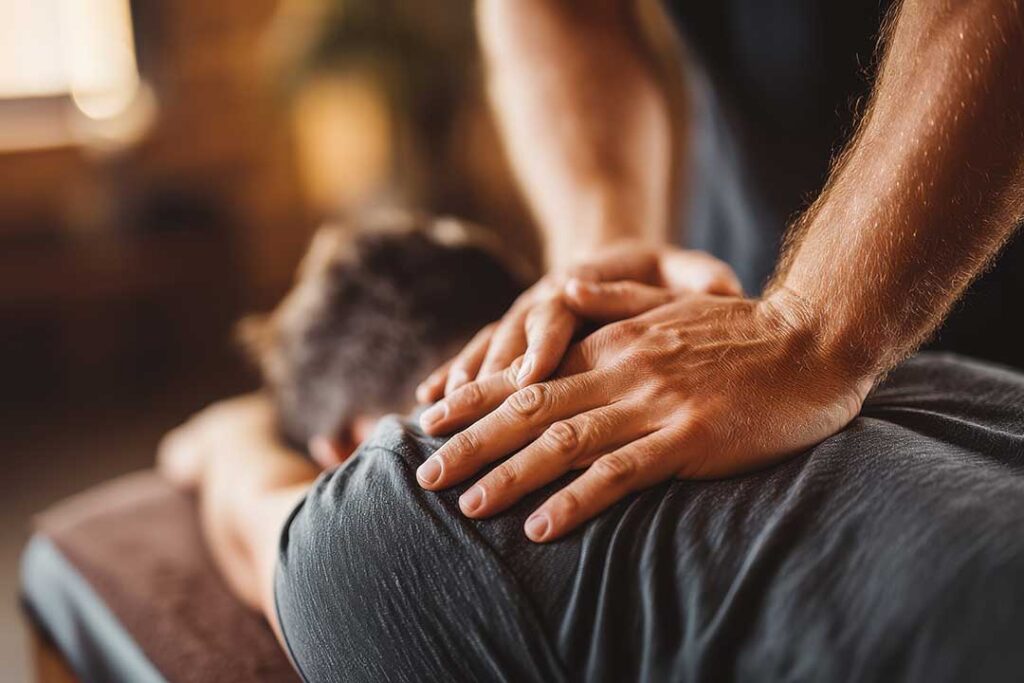
Can chiropractic care be part of managing stress-related back pain?
Chiropractic care may be one component of a broader plan for some people with uncomplicated low-back pain. Spinal manipulation and other non-drug approaches may provide short-term relief for certain individuals, but results vary and treatment should be matched to the person’s symptoms, health history, and preferences. Evidence-based care may also include exercise, education, physical therapy, relaxation strategies, or medical assessment when appropriate. ([nccih.nih.gov](https://www.nccih.nih.gov/health/low-back-pain-and-complementary-health-approaches-what-you-need-to-know?utm_source=openai))
A useful evaluation should consider whether the pain is mechanical, nerve-related, injury-related, or possibly connected to another condition. Stress management can support recovery, but it should not be used to dismiss symptoms or delay needed medical care.
When is back pain a warning sign?
Seek prompt medical attention for back pain accompanied by new leg weakness, loss of bladder or bowel control, numbness around the groin, fever, unexplained weight loss, or severe pain after a significant fall or other injury. Medical evaluation is also appropriate when pain is severe, progressively worsening, repeatedly wakes someone from sleep, or does not improve over several weeks. ([niams.nih.gov](https://www.niams.nih.gov/health-topics/back-pain?utm_source=openai))
For many residents, the most accurate explanation is not “stress or a back problem,” but both. Reducing muscle tension, restoring regular movement, improving sleep, and checking for physical causes can provide a more complete path toward understanding persistent symptoms.
