
 See Our Latest Article on HelloNation
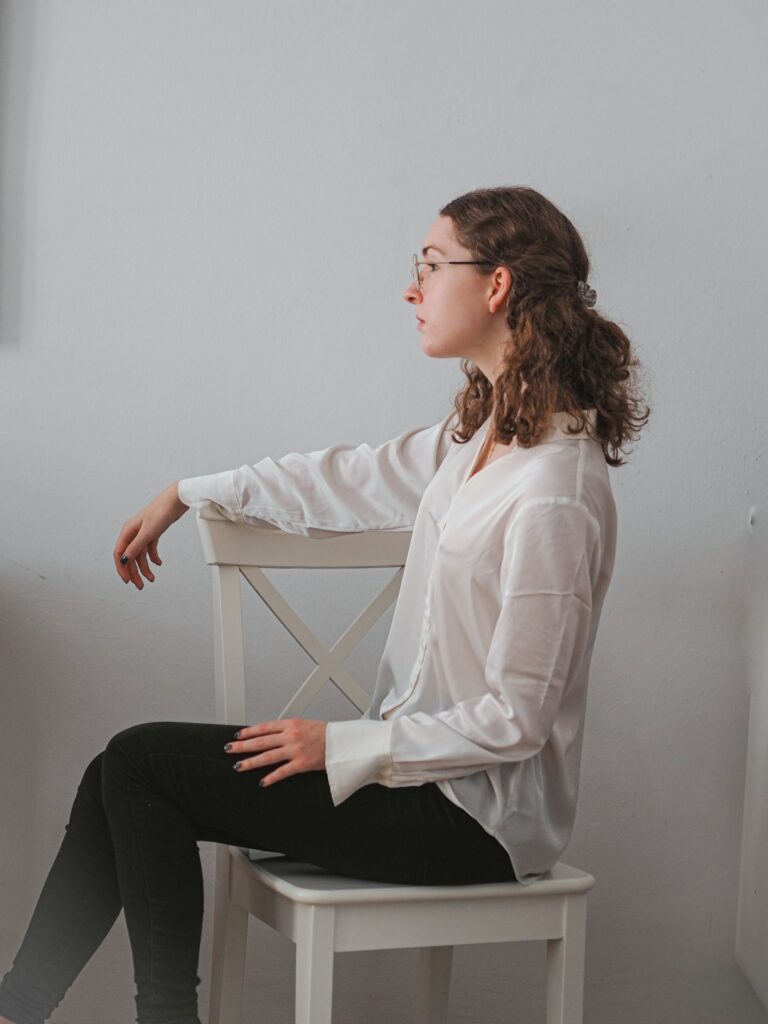
Tension headaches often feel like steady pressure, tightness, or a dull ache across the forehead, temples, scalp, or back of the head. Tight muscles in the neck, shoulders, jaw, and upper back can contribute, especially after long periods of screen use, driving, desk work, stress, or sleeping in an awkward position.
Gentle stretching may reduce muscle tension and improve comfort. It should feel easy and controlled—not forceful. Stop any movement that causes sharp pain, dizziness, numbness, weakness, vision changes, or worsening headache symptoms.
Which stretches can help relieve a tension headache?
The most useful movements are gentle neck, shoulder, chest, and upper-back stretches. They can be performed seated or standing and may be especially helpful after remaining in one position for a long time.
Try the following sequence:
Chin tuck
A chin tuck helps counter the forward-head posture that often develops during computer work, reading, or phone use.
- Sit upright with both feet supported.
- Look straight ahead without tipping the head up or down.
- Gently draw the chin backward, as if making a small double chin.
- Hold for 3 to 5 seconds, then relax.
- Repeat 5 to 10 times.
The movement should be small. Do not force the head downward or clench the jaw.
Side neck stretch
This targets muscles along the side of the neck that may become tight when the head remains tilted or forward.
- Sit tall and keep the shoulders relaxed.
- Slowly lower the right ear toward the right shoulder.
- Keep the face pointed forward.
- Hold for 15 to 20 seconds while breathing slowly.
- Return to center and repeat on the left side.
Do not pull forcefully on the head. A mild stretch is enough.
Upper shoulder stretch
The upper trapezius muscles connect the neck, shoulders, and upper back. Tension in this area can accompany pressure around the temples or base of the skull.
- Sit on one hand or hold the underside of the chair with one hand.
- Tilt the head away from that side.
- Slightly turn the nose toward the armpit for a different angle.
- Hold for 15 to 20 seconds.
- Repeat on the opposite side.
Keep the shoulder being stretched down rather than allowing it to rise toward the ear.
Levator scapulae stretch
This movement focuses on a small but commonly tight muscle at the back and side of the neck.
- Turn the head about 45 degrees to the right.
- Gently look down toward the right armpit.
- Use the right hand only for light guidance if needed.
- Hold for 15 to 20 seconds.
- Repeat on the other side.
Avoid this stretch if it causes pain that travels into the arm or produces tingling.
Shoulder rolls
Shoulder rolls can ease stiffness from sitting, carrying bags, household tasks, or working with the arms in front of the body.
- Lift both shoulders toward the ears.
- Move them backward, then down.
- Complete 8 to 10 slow circles.
- Reverse direction for another 8 to 10 circles.
Keep the movement smooth. Fast or exaggerated circles may irritate an already sensitive neck.
Doorway chest stretch
Tight chest muscles can encourage the shoulders and head to drift forward, increasing strain on the neck.
- Stand in a doorway with one forearm resting against the frame.
- Keep the elbow around shoulder height.
- Step forward gently until a stretch is felt across the chest.
- Hold for 15 to 20 seconds.
- Switch sides.

Do not arch the lower back or push into shoulder pain.
How should stretching be done during a headache?
Stretching is usually most comfortable when performed slowly, with relaxed breathing and minimal effort. A warm shower or warm compress over the neck and shoulders may help the muscles loosen before movement.
A simple routine may take five minutes:
- Perform 5 chin tucks.
- Hold each side neck stretch for 15 seconds.
- Complete 8 shoulder rolls in each direction.
- Hold each chest stretch for 15 seconds per side.
- Finish with several slow breaths, allowing the jaw and shoulders to relax.
Some people feel better after one round. Others benefit from brief movement breaks throughout the day. Stretching should not be used to push through severe pain.
Can stretching prevent tension headaches?
Regular movement may help reduce the stiffness and muscle fatigue associated with some tension headaches, but stretching cannot prevent every headache. Stress, insufficient sleep, dehydration, skipped meals, eye strain, jaw clenching, and prolonged screen use may also play a role.
Residents in Corning may notice more time indoors during cold weather, when heating systems can contribute to dry air and people may spend longer periods seated. Winter travel, shoveling, snow-related tasks, and sleeping with extra layers can also alter posture or increase shoulder tension. Brief movement breaks remain useful during any season.
Consider standing or changing position every 30 to 60 minutes. During a break, walk briefly, relax the hands, lower the shoulders, and look at something farther away rather than immediately switching to another screen.
What common mistakes make neck stretching less helpful?
Stretching is less likely to help when it is performed aggressively or without addressing the habits that caused the tension.
Common mistakes include:
- Bouncing or jerking the neck.
- Pulling hard on the head.
- Holding the breath.
- Stretching through sharp pain.
- Repeating the same position for hours afterward.
- Ignoring jaw clenching or teeth grinding.
- Using a phone with the head bent forward for long periods.
- Expecting stretching to correct a headache caused by illness, injury, or another medical condition.
Gentle movement should leave the neck feeling the same or slightly looser. Increased pain later in the day is a reason to reduce the intensity or stop that exercise.
When is a headache not appropriate for stretching?
Seek urgent medical evaluation for a sudden, severe headache; a headache after a head injury; or head pain accompanied by fainting, confusion, seizure, fever with a stiff neck, new weakness, numbness, trouble speaking, or major vision changes.
It is also wise to seek medical guidance when headaches are new, progressively worsening, unusually frequent, persistent despite self-care, or substantially different from previous headaches. A headache that repeatedly begins with neck movement, radiates into an arm, or occurs with dizziness may require evaluation rather than a stretching routine alone.
Tension headaches are commonly mild to moderate and pressure-like, but not every headache is a tension headache. A careful assessment is especially important when symptoms do not follow a familiar pattern.
How can posture support the benefits of stretching?
Stretching works better when the neck is not repeatedly placed under strain. Keep the screen near eye level, let the elbows rest close to the body, and support both feet when seated. The goal is not to hold a rigid “perfect” posture; it is to change positions often and avoid staying in one position for too long.
Relaxing the jaw can also help. Keep the tongue resting comfortably, leave a small space between the upper and lower teeth, and avoid clenching while concentrating. Combining gentle stretches with adequate water, regular meals, sufficient sleep, and short movement breaks may provide more lasting relief than stretching alone.
